
In the intricate dance of business mergers, where companies join forces to achieve shared goals and growth, one often overlooked aspect can make or break the success of the union—standardizing data processes. As organizations merge, they bring together diverse systems, technologies, and, most importantly, data. The harmonization of these disparate data processes is not just a technical consideration; it’s a strategic imperative that impacts operational efficiency, decision-making, and the overall health of the newly formed entity.
Category Archives: Big Data
The 7 Highly Effective Habits for Sustaining Competitive Advantage

In the complex realm of modern business, maintaining a competitive edge requires more than just adapting to change; it demands a proactive and strategic approach to business processes. As industries evolve, organizations that can effectively manage and optimize their business processes position themselves as leaders in the market. In this article, we will explore the top seven habits that contribute to sustaining a competitive advantage through effective business process management.
Mastering Process Redesign for Sustainable Success: Overcoming Procrastination

In today’s constantly changing business realm, the ability to develop and execute process redesigns is essential for maintaining competitiveness and relevance. Businesses that embrace innovation and proactively adapt to evolving challenges are better poised for long-term success. However, the ever-present enemy of progress is procrastination. In this article, we’ll explore strategies for developing and executing process redesigns for the future while combating procrastination. By understanding the key steps and overcoming common hurdles, you can transform your organization for sustained success.
Resolving Process Problems and Enhancing Decision-Making with Data Analysis

Organizations today face numerous challenges that demand innovative solutions. The ability to adapt to these challenges and make informed decisions is often what separates thriving businesses from struggling ones. At the heart of this capacity for adaptation and success is data analysis. Data analysis is not just a buzzword; it’s the driving force behind process improvement and sound decision-making in any organization.
The Importance of the Symbiotic Relationship between Continuous Improvement and an Analytical Mindset

In today’s business arena, companies face a relentless quest for progress and innovation. The need to stay competitive, adapt to market changes, and deliver exceptional value to customers is paramount. Yet, we must navigate this ever-evolving business landscape with no guarantees, facing a myriad of challenges along the way. It’s in this fast-paced business world that two critical attributes come into play: continuous improvement and an analytical-thinking mindset. Together, they form the foundation for sustainable growth and success.
The Vital Pre-Automation Step: Re-evaluating Processes for Efficiency and Effectiveness

Presently, businesses constantly seek ways to optimize their operations and improve productivity. Automation has emerged as a powerful tool in achieving these goals. However, before diving headfirst into automation, it is crucial to pause and consider whether the process in question is optimized for efficiency and effectiveness. In this blog post, we’ll explore the significance of re-evaluating processes before automating them, and why this step is essential for long-term success.
PostgresSQL: Cube, RollUP, Grouping Sets, Partial Cube, AND Partial RollUP Operators
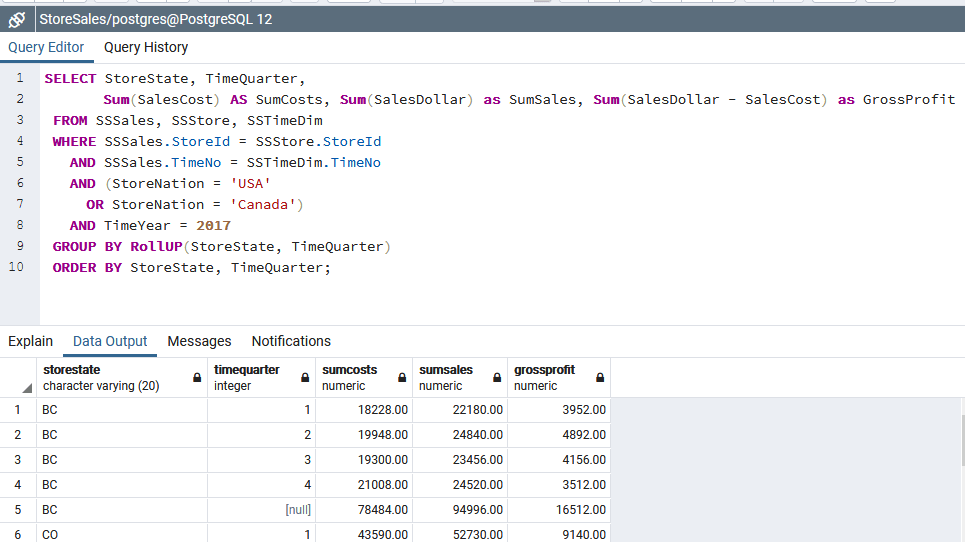
Continuing my SQL education, I have been working with PostgresSQL while taking online courses via Coursera. I have create some SQL statements using cube, rollup and grouping sets operators. See below: Cube ROLLUP: Grouping Sets: Partial Cube: Partial RollUP:
Digging into Logistics: Data Analysis with SQL

By understanding customer priorities you yield profitable insights. When you plan your data analysis around your strategic goals and customer priorities you reduce waste and enhance productivity. Below I have developed a relative logistics SQL database schema to demonstrate my skills. (SQLlite Source) CREATE TABLE customers ( cust_id INTEGER PRIMARY KEY, cname TEXT,Continue reading “Digging into Logistics: Data Analysis with SQL”
Notable Bookkeeping: SQL Work Portfolio Showcase

Happy Friday! I hope you’ve had a great week! Notable Bookkeeping can code! We are proficient in SQL, Python and HTML. See our work samples here. We’re also proficient in Excel including data manipulation methods, such as, vlookup, formulas, pivot tables, graphs and conditional formatting. How are we different? We align customer priorities with strategicContinue reading “Notable Bookkeeping: SQL Work Portfolio Showcase”
Planning a Data Analysis

At Notable Bookkeeping we believe a successful data analysis is attributed to how well it was planned. It will weed out the factors that do not have a relative effect on the response variable and identify the best value points for the factors that do have a relative effect on the response variable. When conductingContinue reading “Planning a Data Analysis”
 Notable