E.O.W (End of the Week) Notable Tip: Redesigning Business Models

Happy Friday!

I hope you’ve had a great week.

Today, I want to discuss business models. As we all know, changes in trends and customer behavior affects profit. Therefore, it is important that leaders stay abreast of trends that could affect their bottom-line and have solutions at the ready. They should also include non-customers into their value chain spectrum for the purpose of realizing profitable opportunities.

“Companies should redesign their business model every 4 to 5 years.”


I hope you’ve enjoyed this short tip and as always, “Success is continuous improvement.”

E.O.W (End of the Week) Notable Tip: Strategic Plan Performance

Happy Friday!

I hope you’ve had a great week.

Today, I want to end this week with key insights on strategic plan performance.

“Strategic plans should concentrate on critical success factors for the company, providing plans for closing the gaps between what the company is capable of doing versus what it needs to be able to do. Gap analysis is key to identifying areas for improving performance. Negative gaps require immediate corrective action to eliminate the root cause and improve performance toward the goal and narrow the gap. Positive gaps showing better than expected performance may encourage the company to take further action to enhance the gap. Lastly, it is critical to integrate a contingency plan in case of errors or significant changes in the market occur.”


As always, “Success is continuous improvement.”


Reasons for Lean Six Sigma

Lean Six Sigma allows for the improvement in speed and performance of a process coupled with the reduction of waste and defects. If you ever find your current processes with high rework, client turnover, product recalls/crashes, and a plethora of errors it might be time to change your process design. As you will read below, I have noted a few benefits and reasons for Lean Six Sigma.

  • Lean Six Sigma projects cut costs and expenses by eliminating waste (a result of inefficient or non-value added process steps).
  • Whilst, the reduction of expenses helps companies yield higher revenues and profits. Improvements in quality and delivery also have the potential to increase sales and profit.
  • When waste is eliminated, processes flow seamlessly and delivery times improve.
  • As a process flows more quickly, the amount of inventory needed to keep the process moving is reduced and cash is freed up for investment elsewhere.
  • By improving quality in each process, customer satisfaction is increased.
  • Lean Six Sigma allows employees to work in valued added processes which in turn increases overall internal satisfaction and morale.
  • The cost savings of implementing Lean Six Sigma, compared to the time and resources spent working on a project without Lean Six Sigma is typically 10 to 20 times the investment.


Notable Bookkeeping is a certified Lean Six Sigma company. Contact us today to learn more about our process improvement/Lean Sig Sigma services! We work with all industries and all company sizes.


E.O.W(End of the Week) Notable Tip: Quality Costs

Happy Friday!

I hope you’ve had a great week.

Today, I want to discuss quality costs and how they affect your bottom line.

“Quality costs can be found in prevention costs; detection costs (auditing), rework, scrap, downtime and material costs. “

Effective organizations know and pay close attention to their quality costs. They invest in prevention plans to ensure quality is always delivered to the customer and to safeguard their profits.

Hope you enjoyed this short Friday tip.

As always, “Success is continuous improvement.”

E.O.W(End of the Week) Notable Tip: Capturing Market Space

Happy Friday!

I hope you’ve had a great week. Below I leave you with a short tip on capturing market space.

As always, “Success is continuous improvement.”


“The company that learns and adapts the smartest and fastest wins the battle of capturing new markets.”

Conducting an Effective Procurement Process Audit

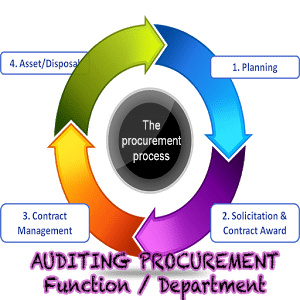
Many clients bring me in to audit their expenses and identify inefficiencies in their procurement and Accounts Payable processes. Generally, a procurement process involves the following factors:

  • Current business need to purchase raw materials and supplies
  • Vendor research and price comparison, including the development of a quality plan
  • Approving the vendor and authorizing the purchase
  • Purchasing the needed items
  • Receiving an invoice
  • Delivery of goods
  • Inspection of goods before using (random sampling)
  • Paying the supplier after quality, delivery and contract agreements have been met

From my experience, errors and waste start to creep up during the Sourcing stage as many Procurement Managers are focused on price per unit instead of the total cost. This is never the best course of action because these vendors will have to recover their costs by lowering quality, not delivering on time, et cetera. It is imperative that when conducting a procurement process audit you use random sampling to analyze purchase orders, invoices and contract agreements to ensure quantity, item description, prices, discounts and any other relative information matches. Sometimes a third party may be liable for the payment of the purchase and it was paid by the company instead which results in an unnecessary expense.

In addition, the company may have entered into a contract agreement with a freight carrier that states a guaranteed delivery, if this is not being met then the company is not liable to remit any payment.

In regards to vendors, it is also imperative that you familiarize yourself with the company’s internal controls for approved vendors. You should audit their vendor profile database in their accounting software to ensure they are legitimate and compare addresses with employee addresses to detect fraud. You should also ensure early pay discounts are being taken advantage of and that the correct discount is being applied.

It is also important to actually view the process in action and write notes about what you see. You should also speak with the employees who actually performing the activities in the process to truly understand bottlenecks and pains. After you gather this information, you should collaborate with them to create a process map to further detect inefficiencies and improve the process.

Further reading on reducing procurement costs:

How to stop freight charges from eating away at profits

Price Focused Sourcing is bad for Business

Lean Wednesday Tip: Objectives of a Process Improvement Project

“The validity of a well-planned process improvement project is identified through value-added process mapping, problem isolation, root cause analysis and problem solution. Ultimately, the key to refining processes is to concentrate on the process from the customer’s point of view and identify and eliminate non-value added activities.”